









Common Signs of Baby Teething Every Parent Should Know
The drooling, the fussiness, the sudden urge to gnaw on everything in sight: These signs of baby teething can leave parents wondering what's actually happening and how to help. Teething looks different for every baby, but certain patterns show up often enough that recognizing them can bring clarity and confidence.
This guide discusses the most common signs of teething and how nutrient-dense options like baby food pouches can help maintain nourishment during this phase.
When Do Babies Usually Start Teething?
Most babies start teething between 4 and 7 months, often coinciding with the introduction of baby food from 6 to 12 months. Still, timing widely varies, as some little ones sprout their first tooth as early as 3 months, while others wait until nearly their first birthday. Both ends of that spectrum fall within a perfectly normal range.
Best Sellers
They're not just parent favorites—they're little ones favorites too.

Little World Traveler Pack


Power Protein Variety Pack
A baby's first teeth are usually the lower front ones, followed by the upper front teeth. From there, primary teeth continue to appear until around age 3, when most children have all 20 baby teeth. Each teething episode can last around 3 to 8 days, with symptoms often showing up before a tooth breaks through.
Most Common Signs of Baby Teething

These are the teething symptoms many families notice first, though not every baby experiences all of them.
Swollen or Tender Gums
Gums may look puffy, red, or slightly inflamed where a new tooth is pushing through. Parents might feel a firm bump beneath the surface. Babies often react when that area gets touched or during feeding sessions.
Increased Drooling
Excessive drool is frequently one of the earliest indicators, sometimes appearing weeks before any tooth actually emerges. All that drool can cause mild irritation around the mouth, chin, or neck. Keeping the area clean and dry with a soft cloth helps prevent rashes.
Fussiness or Irritability
Teething pain can make babies crankier than usual, with mood shifts coming and going throughout the day. Many parents wonder, “Does breastfeeding help with teething?” Extra cuddles and familiar breastfeeding routines can help soothe a teething baby during this phase.
Other Signs That May Appear During Teething
Beyond the classic symptoms, some babies exhibit additional behaviors associated with teething.
Chewing and Biting on Objects
Babies instinctively gnaw on things because counter-pressure against sore gums provides relief. From fingers and toys to the crib rail:, anything within reach becomes fair game.
Changes in Feeding Habits
When introducing solids, parents might notice their baby eating less because sucking or chewing irritates tender gums. This refusal to eat solid food or to nurse is a common teething sign.
Others prefer shorter, more frequent feeds. Smooth, nutrient-dense foods can help maintain nutrition during this stretch. Options like bone broth for babies and other teething food for babies offer gentle textures while still delivering protein and healthy fats.
Disrupted Sleep Patterns
Teething discomfort is a common reason why babies fight sleep, often leading to more night waking or shorter naps. Pain can feel more noticeable at night when there are fewer distractions, making home remedies for a teething baby at night especially helpful for restoring rest.
Signs That Might Not Be Teething
Teething often gets blamed for symptoms that may actually signal something else entirely. The NHS confirms that high temperature and diarrhea aren't typical teething symptoms and recommends contacting a healthcare provider if your baby seems particularly unwell.
High Fever or Persistent Diarrhea
While teething may cause a very slight rise in temperature, it doesn't cause true fevers. A rectal temperature of 100.4°F or higher typically points to illness rather than teething. Persistent diarrhea or vomiting also warrants attention from a healthcare provider, and knowing what to feed a baby with diarrhea can help keep them hydrated while they recover.
Ear Rubbing with Other Symptoms
Simple ear pulling without other symptoms is harmless, and these children rarely have an ear infection. On the other hand, gum pain can radiate to the cheeks and ears, making ear pulling common during teething. However, persistent ear rubbing combined with fever may indicate an ear infection worth mentioning to a healthcare professional.
Unusual Rashes Beyond the Mouth Area
Drool-related rashes typically stay limited to the mouth, chin, and neck. A rash spreading to the torso, arms, or legs is worth discussing with a healthcare provider to rule out other conditions.
Gentle Ways to Support a Teething Baby

Several safe, simple strategies and home remedies for teething babies can help ease discomfort during this phase.
Offering Safe Teething Items
Cold teething toys like solid rubber or silicone rings work well, as does a clean damp washcloth cooled in the fridge.
The FDA has received reports of death and serious injuries caused by teething jewelry, including strangulation and choking from items like amber teething necklaces. Avoid liquid-filled teething rings, teething necklaces or bracelets, and frozen items that are too hard for delicate gums.
Keeping Skin Clean and Dry
Gently wiping drool with a soft cloth helps reduce irritation. A simple barrier cream can also protect skin from persistent moisture.
Staying Responsive to Comfort Needs
Gently rubbing your baby's gums with a clean finger provides counter-pressure that eases discomfort. Once that first tooth erupts, gently brushing baby teeth with a soft-bristled infant toothbrush supports oral health and helps prevent sugar bugs on teeth.
Find Gentle Nutrition for Teething with Serenity Kids
Teething can temporarily disrupt feeding, but nutrition doesn't have to take a backseat. Having nutrient-dense options on hand makes a real difference during tough teething days. Smooth textures are gentle on sore gums while keeping palate development moving forward.
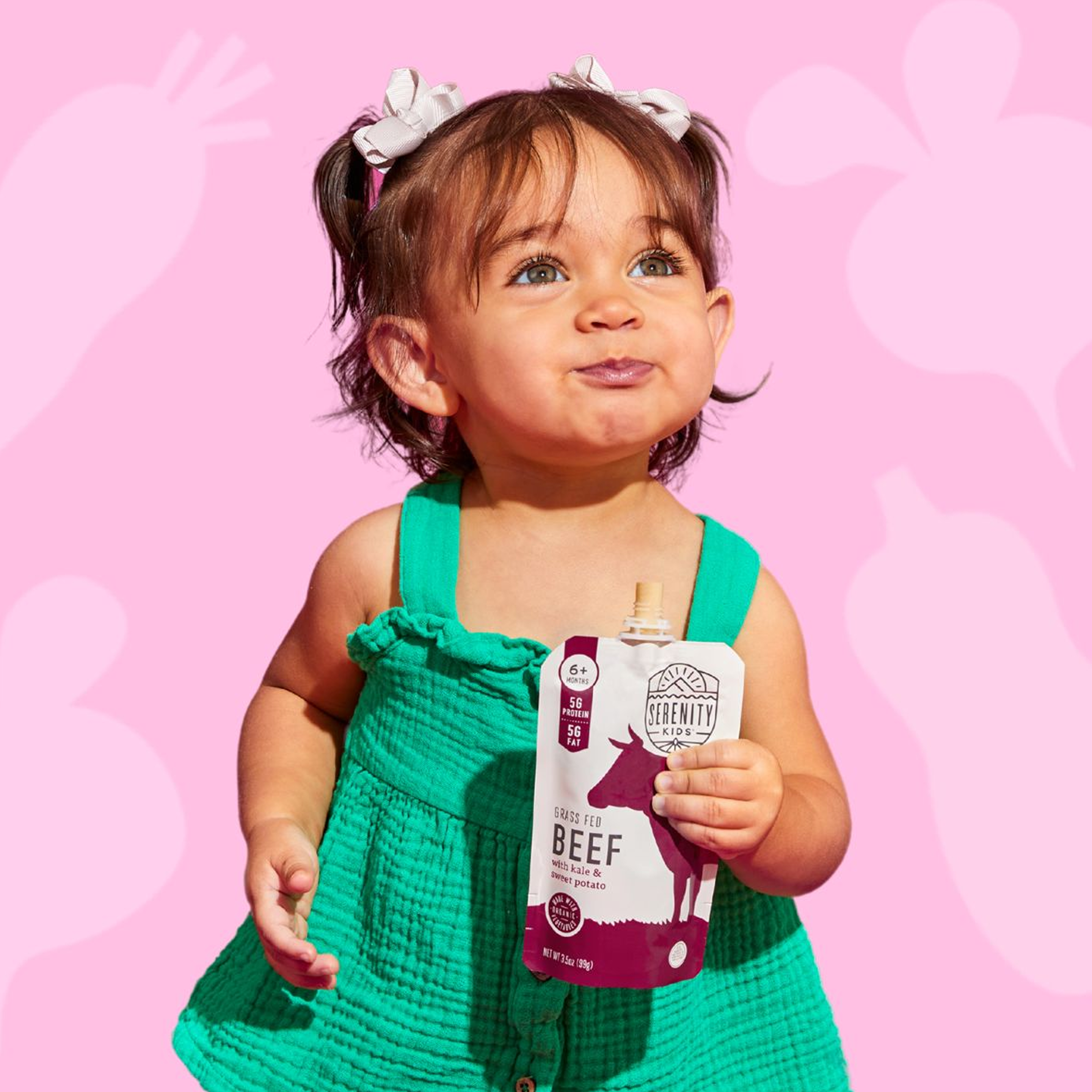
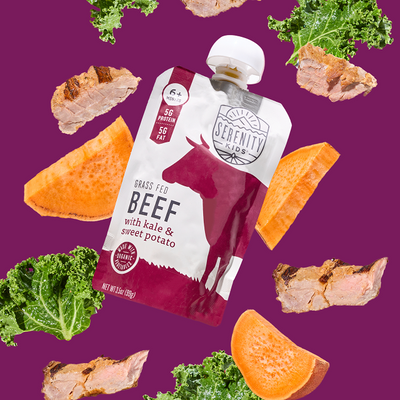
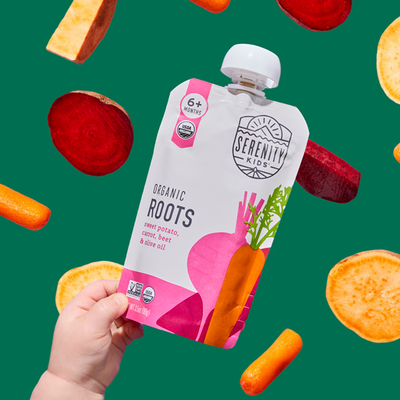
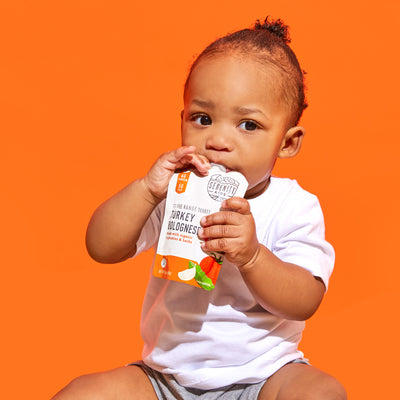
Whether it's a meat-and-veggie puree, a dairy-free smoothie, or organic veggie pouches, Serenity Kids baby food pouches deliver balanced protein and healthy fats without compromise. Explore our full collection of the best baby food to find options that work for every phase of the feeding journey.
Sources:
-
Children's Hospital Los Angeles. A Parent's Guide to Teething: Teething Timeline, Symptoms, and Relief Strategies. https://www.chla.org/blog/advice-experts/your-infant-teething-know-signs-and-symptoms.
-
California Department of Public Health. Is your baby teething? https://www.cdph.ca.gov/Programs/CCDPHP/DCDIC/CDCB/CDPH%20Document%20Library/Oral%20Health%20Program/IsYourBabyTeethingEnglish.pdf.
-
NHS Mid and South Essex. Teething support. https://www.midandsouthessex.ics.nhs.uk/health/campaigns/child-health/childrens-oral-health/teething-support/.
-
Mayo Clinic. Teething: Tips for soothing sore gums. https://www.mayoclinic.org/healthy-lifestyle/infant-and-toddler-health/in-depth/teething/art-20046378.
-
Seattle Children's Hospital. Ear - Pulling At or Rubbing. https://www.seattlechildrens.org/conditions/a-z/ear---pulling-at-or-rubbing/.
-
U.S. Food and Drug Administration. Safely Soothing Teething Pain in Infants and Children. https://www.fda.gov/consumers/consumer-updates/safely-soothing-teething-pain-infants-and-children.