
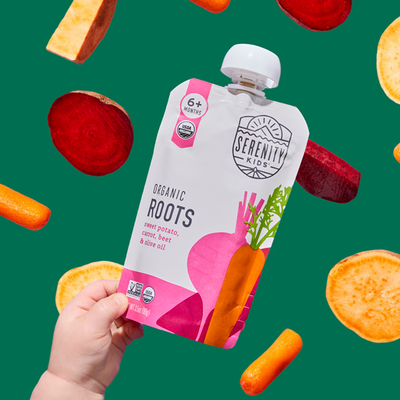


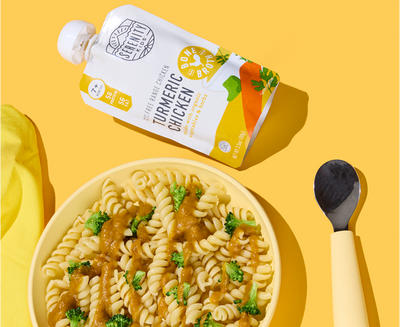
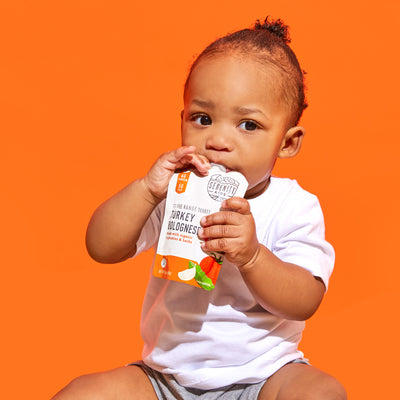





Feeding your baby is an exciting journey, one filled with new flavors, textures, and developmental milestones. As your little one grows from 6 to 12 months, their nutritional needs evolve rapidly, and transitioning from a diet of primarily breast milk or formula to eating solid foods can seem a little overwhelming. A well-structured 6 to 12 months baby food chart can serve as your trusted roadmap, guiding you through each stage, from baby food pouches to solids, with practical meal plans and portion recommendations.
Below, you’ll find detailed charts for each age group with recommended foods, serving sizes, and food frequency. Let's take a closer look at the different stages of your baby's food journey.
Baby Food Stages From 6 to 12 Months: Simple Chart to Follow
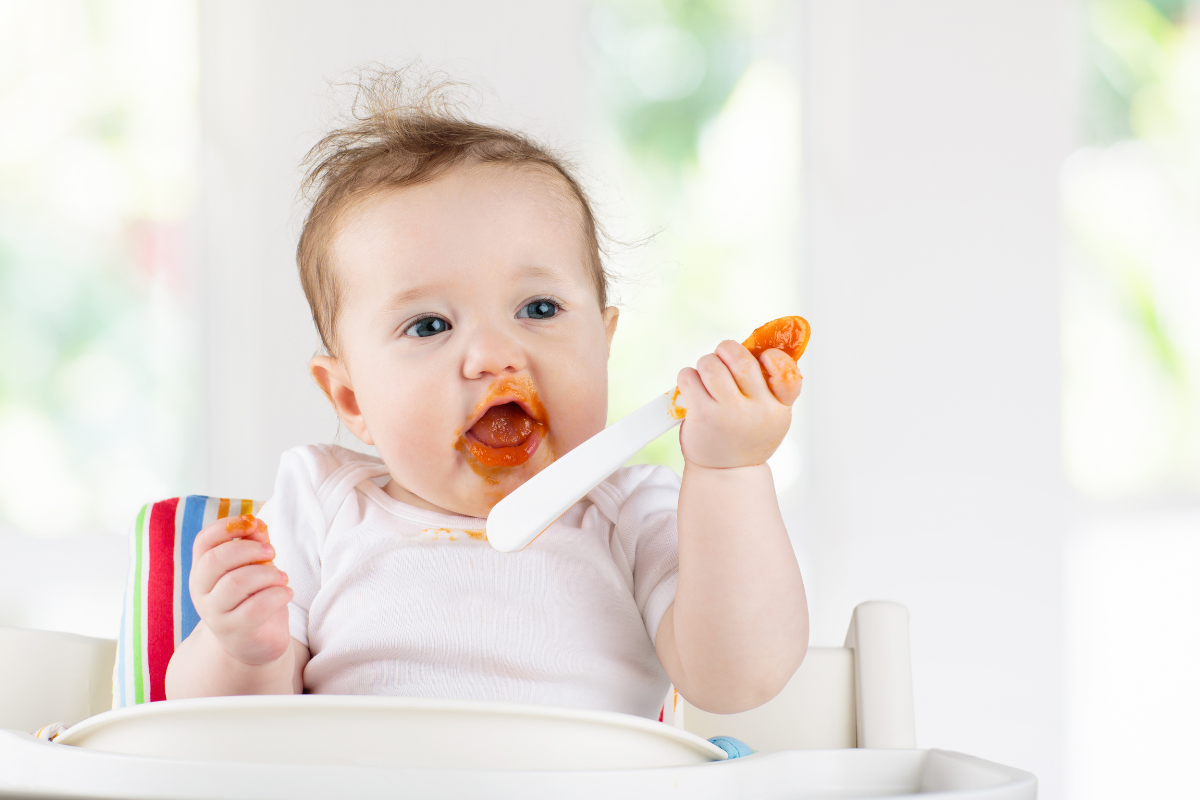
By around 6 months, most babies are developmentally ready to start exploring solid foods. Until now, their nutrition has primarily come from breast milk or formula, but now it’s time to introduce a variety of new flavors and textures. Because every baby is different, a comprehensive 6 to 12 months baby food chart helps you keep track of what to offer at each stage for balanced nutrition and gradual exposure to different food consistencies, from smooth purees to soft finger foods and small pieces of food that fit safely in your baby's mouth.
Best Sellers
They're not just parent favorites—they're little ones favorites too.

Little World Traveler Pack


Power Protein Variety Pack
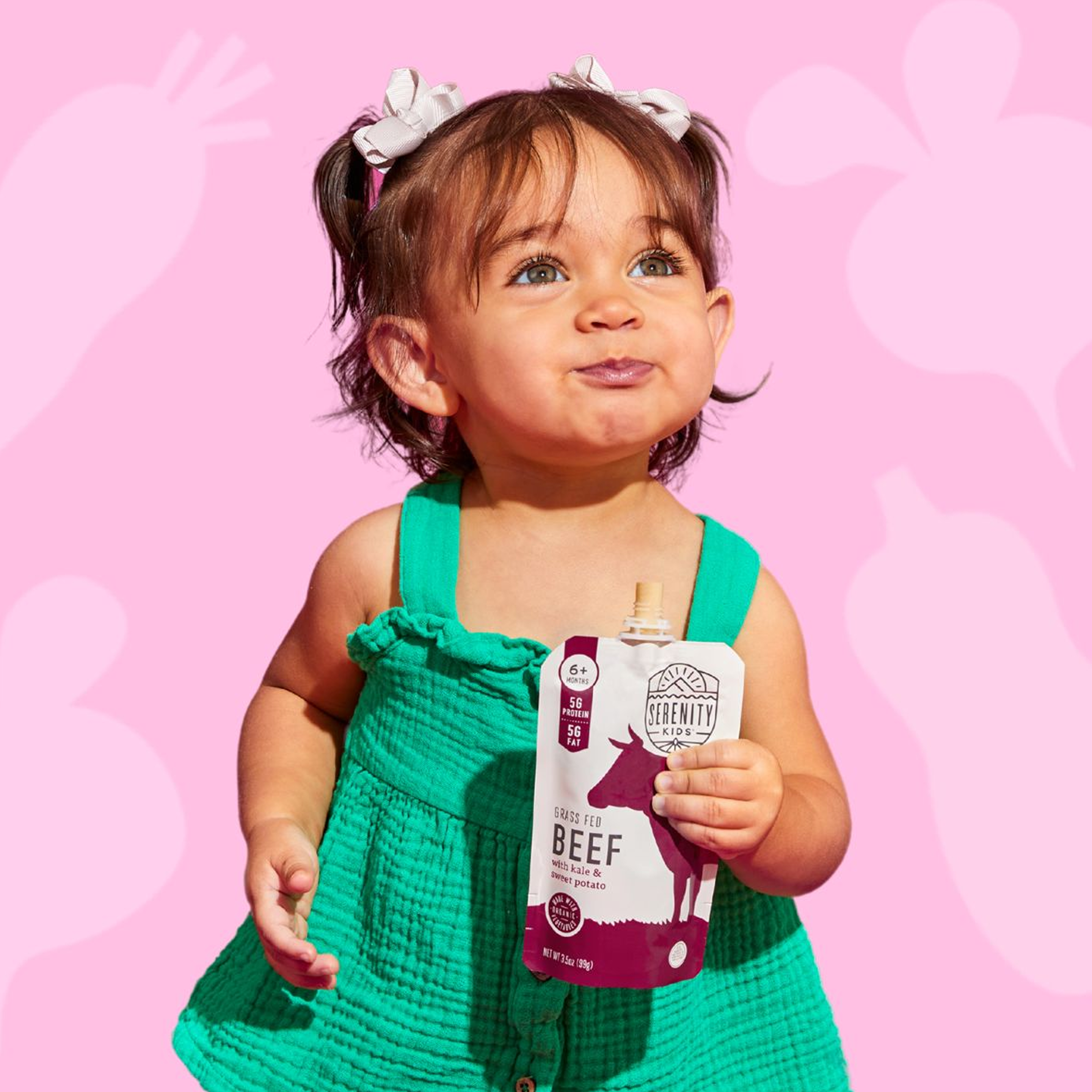
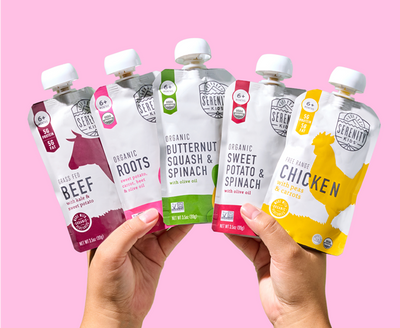
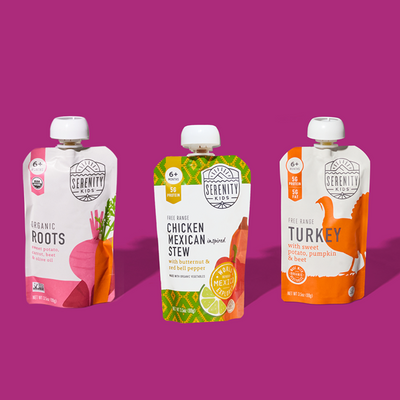
At every age bracket, you can easily complement your homemade purees with convenient, nutritious options from Serenity Kids. Their Veggie Pouches, Smoothie Pouches, Meat Pouches, and Veggie Puffs are designed to support your baby’s growth while keeping mealtime simple and stress-free.
What About 4 & 5 Months? Early Signs of Readiness
Some parents notice that their baby seems curious about food as early as 4 or 5 months. Common early signs of readiness include:
-
Good head and neck control
-
Ability to sit with minimal support
-
Showing interest when others are eating
-
Reaching for food when it’s offered

Although these cues can be encouraging, there’s no rush! Most health experts recommend waiting until around 6 months to introduce solid foods. As your baby learns to chew and explore new textures, always make sure foods are cut into safe, manageable pieces of food. If you have questions, ask for guidance from your healthcare practitioner to ensure your baby is ready.
6 Month Baby Food Chart – The Official Start to Solids
At 6 months, your baby is typically ready for their first solid foods. Some parents choose to focus primarily on purees that are smooth and easy to swallow, while others prefer to jump right into baby-led weaning.
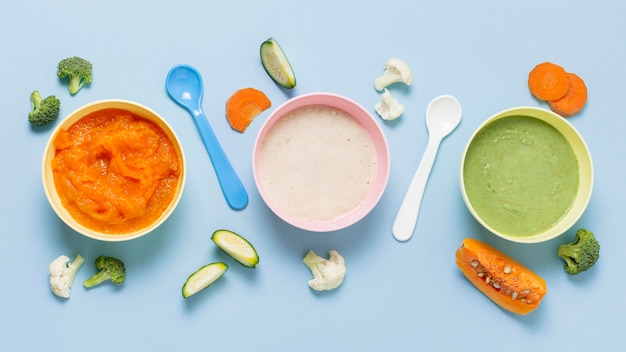
Serenity Kids Recommendations for 6 Months
-
Veggie Pouches: Smooth purees made from high-quality, nutrient-rich vegetables.
-
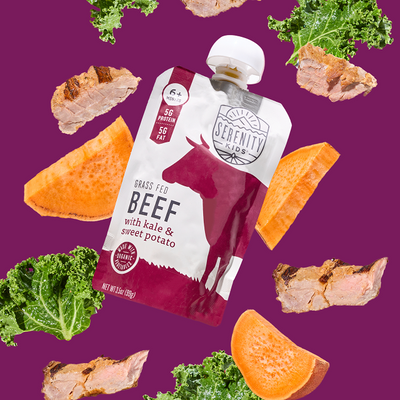
Meat Pouches: Offer a smooth, nutrient-rich blend ideal for introducing meats.
6-Month Baby Food Chart
|
Meal Time |
Food Type |
Serving Size |
Frequency |
|
Breakfast |
Pureed vegetables (e.g., carrots, sweet potato) with healthy fats |
2-4 tablespoons |
Once daily |
|
Lunch |
Blend of pureed meats & vegetables |
2-4 tablespoons |
Once daily |
|
Dinner |
Blend of pureed meats & vegetables |
2-4 tablespoons |
Once daily |
|
Snack |
Occasional spoonful of puree |
1-2 teaspoons |
As needed (based on hunger cues) |
7-9 Month Baby Food Chart – Expanding Variety
By 7 months old, your baby might be happily eating or might be still getting used to solids. Either is fine and normal! Take their lead and either continue on with what you're offering, or start to offer a broader range of foods and textures. If they seem interested, you can introduce thicker, mashed foods and new combinations of ingredients to create more complex flavors. This stage is about expanding their palate while still ensuring that foods are easy to swallow and digest.
Key Foods to Introduce at 7 Months
-
Protein Introduction: Pureed meats mix well with savory root veggies like carrots and sweet potatoes. These purees can be thin
-
Mashed Foods: Slightly thicker textures such as mashed avocado
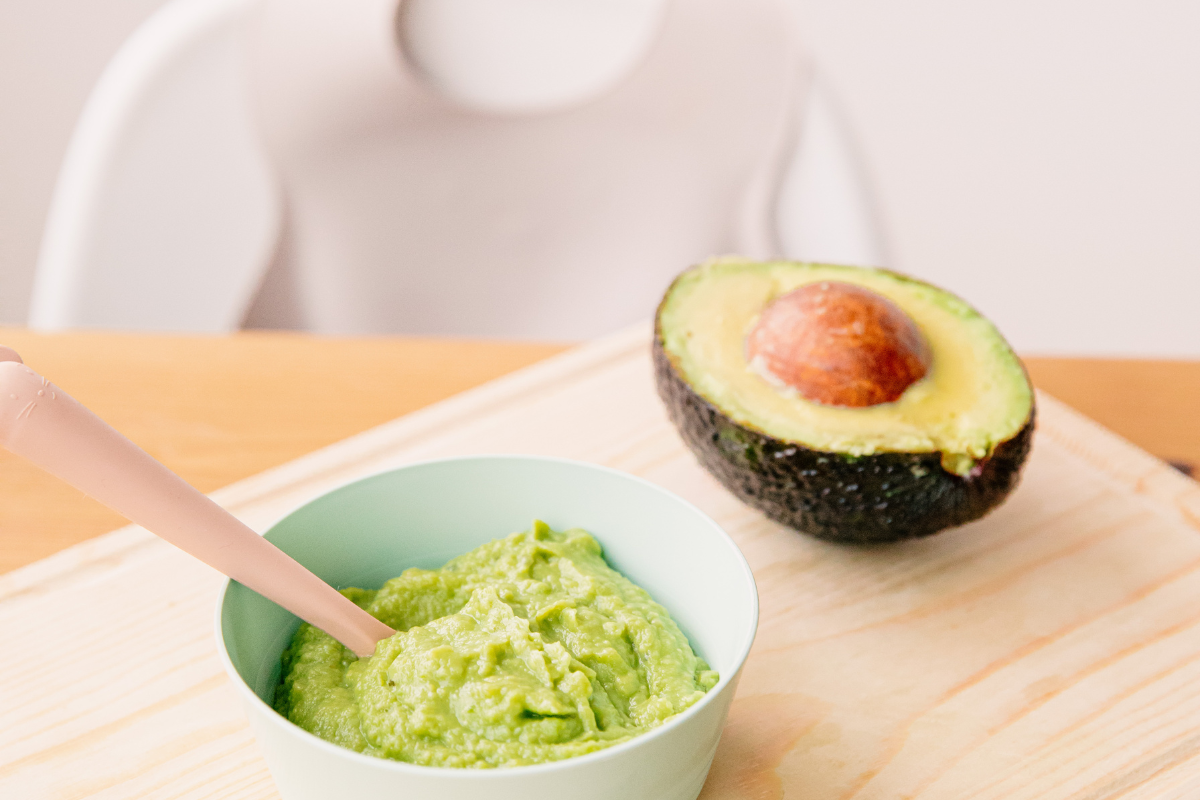
Serenity Kids Product Recommendations for 7 Months
-
Meat Pouches: Offer a smooth, protein-rich blend ideal for introducing meats.
-
Veggie Pouches: Now featuring a mix of vegetables for more flavor complexity.
7-Month Baby Food Chart
|
Meal Time |
Food Type |
Serving Size |
Frequency |
|
Breakfast |
Mashed avocado and pureed carrots |
2-4 tablespoons |
Once daily |
|
Lunch |
Combination puree (e.g., carrots & green beans) with a protein addition (e.g., chicken puree) |
2-4 tablespoons |
Once daily |
|
Dinner |
Pureed blend of vegetables (e.g., sweet potato) blended with grass-fed ground beef |
2-4 tablespoons |
Once daily |
|
Snack |
Mashed fruits and veggies like avocado and parsnips |
1-2 teaspoons |
As needed |
At 7 months, introduce new textures gradually and always observe your baby’s response to ensure they’re comfortable with the changes.
9-12 Months – Encouraging Independence & Balanced Nutrition
Between 9 and 12 months of age, your baby is ready for a wider variety of textures and can begin to enjoy foods that resemble family meals. At this stage, your baby may start eating finely chopped foods along with purees and mashed items, fostering greater independence and participation in mealtime.
Key Foods to Introduce at 9-12 Months
-
Chopped and Textured Foods: Soft, finely chopped vegetables and fruits, along with small pieces of well-cooked meat or fish.
-
Balanced Meals: Aim for a mix of food groups in each meal: vegetables, fruits, proteins, and dairy (if introduced).
-
Family Meal Adaptations: Serve modified versions of family meals with safe, baby-friendly textures, such as mashed potatoes (without grains), soft-cooked vegetables, and small pieces of cheese.

Serenity Kids Recommendations for 9-12 Months
-
Meat Pouches & Veggie Pouches: Convenient options that provide balanced nutrition in a format that’s easy for your baby to handle.
-
Grass-Fed A2 Whole Milk Formula: A nourishing supplement for formula-fed babies that supports growth during this critical stage.
-
Grain Free Baby Puffs: Continue to offer these as practical finger foods that encourage self-feeding and independence.
9-12 Months Baby Food Chart
|
Meal Time |
Food Type |
Serving Size |
Frequency |
|
Breakfast |
Finely chopped soft fruits (e.g., banana, pear) with a mini omelet or scrambled eggs, plus mashed avocado |
3-5 tablespoons or small pieces |
Once daily |
|
Lunch |
Balanced plate: soft-cooked vegetables, finely chopped meat or fish, and pureed or mashed fruits |
3-5 tablespoons |
Once daily |
|
Dinner |
Mixed textures: mashed vegetables with small pieces of protein, along with a serving of pureed fruits |
3-5 tablespoons |
Once daily |
|
Snacks |
Finger foods: soft-cooked green beans, small pieces of cheese, unsweetened yogurt, or other bite-sized items |
1-2 teaspoons or small pieces |
As needed |
At 9-12 months, encourage self-feeding and offer a variety of textures so that your baby continues to develop healthy eating patterns and enjoys mealtime as a family experience.
Final Tips for a Smooth Transition to Solid Foods
Here are a few key tips to ensure a smooth transition from breast milk only to solid foods:
-
Introduce New Foods Gradually: Start with single-ingredient purees and slowly mix flavors as your baby grows.
-
Monitor for Allergies: Introduce one new food at a time and watch for any adverse reactions.
-
Follow Your Baby’s Cues: Adjust portions and textures based on your baby’s hunger signals and developmental readiness.
-
Encourage Independence: As your baby matures, offer finger foods to promote self-feeding and motor skills.
-
Keep a Balanced Feeding Schedule: Use your 6 to 12 months baby food chart as a guide to ensure your baby’s meals are nutritionally balanced.
If you're ever pressed for time or need a quick, nutritious solution, Serenity Kids offers a range of ready-made, grain-free baby food options. Our Veggie Pouches, Meat Pouches, Smoothie Pouches, Veggie Puffs, and Grass-Fed A2 Whole Milk Formula are designed to make feeding your baby easier while supporting healthy growth.
Final Thoughts
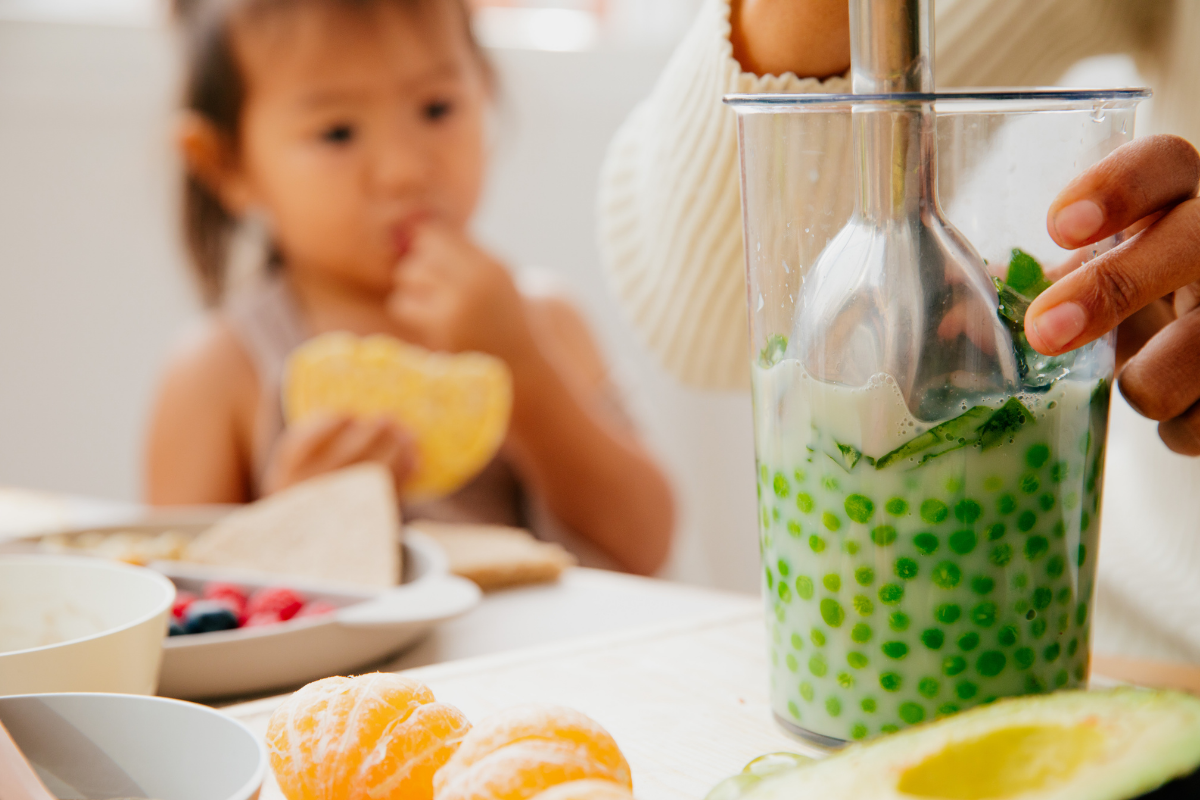
Feeding your baby from 6 to 12 months is an exciting adventure filled with new flavors, textures, and developmental milestones. By considering these guidelines, you can confidently introduce solid foods, starting with smooth purees, progressing to mashed foods, and eventually incorporating finger foods. Every baby’s journey is unique, so feel free to adjust the plan to fit your baby’s needs.
And remember, Serenity Kids offers convenient, nutritious baby food options to support your busy lifestyle. Enjoy this special time as your baby explores the wonderful world of solid foods.
Frequently Asked Questions
Q: What is the feeding schedule of a 6-12 month old baby?
A: A typical feeding schedule for a 6-12 month old baby includes three meals plus snacks daily. Breast milk or formula remains the primary nutrition source, with solid portions increasing gradually as your baby grows. Use hunger cues, not the clock, as your general guideline for snack frequency.
Q: When and how should I start introducing solid foods?
A: Most babies are likely ready to begin starting solids around 6 months. A key sign your baby should be able to show is head control, they need to hold their head steady before you introduce first foods. Start with single-ingredient purees and wait 3 to 5 days before introducing foods one at a time to monitor for reactions.
Q: What foods should I offer at 7 and 8 months?
A: At 7–8 months, progress from smooth purees to thicker, soft solids and soft chunks like mashed avocado or blended chicken with vegetables. This is also a good time to expose your baby to as many flavors as possible to build a varied palate. Avoid added sugars and always prepare foods to an age and developmental-ly appropriate texture.
Q: How do I transition to family-style meals between 9 and 12 months?
A: Between 9–12 months, your baby may be ready for stage 3 foods, finely chopped textures and soft family-style meals. Finger foods support self-feeding, but avoid potential choking hazards like whole grapes or hard raw vegetables. Always supervise your baby to eat safely and cut everything into small, manageable pieces to prevent choking.
Q: How can I ensure my baby's meals are balanced and nutritious?
A: Offer a rotating mix of purees, mashed foods, and finger foods across three meals and occasional healthy snacks for picky eaters to support healthy growth and development. Avoid fruit juice and added sugars before one year of age. If your baby has severe eczema or a known egg allergy, consult your pediatrician before introducing foods from common allergen groups.
Q: When can I introduce meat into my baby's diet?
A: Food for babies doesn't have to mean just purees, meat is one of the best first foods you can offer, and most babies are ready for foods like pureed meats as early as 4 to 6 months once ready to begin solids. Meat supports iron and protein needs critical to your baby's feeding journey. Check out our guide on when babies can have meat, or explore Serenity Kids' meat pouches as an easy starting point.