
Access Denied
IMPORTANT! If you’re a store owner, please make sure you have Customer accounts enabled in your Store Admin, as you have customer based locks set up with EasyLockdown app. Enable Customer Accounts
TABLE OF CONTENTS
Written by Shelley Cameron
February 17, 2022
Join Our Email List For 15% Off Your First Purchase
When Can Babies Eat Puffs?

Estimated time to read 5 minutes
When Can Babies Have Puffs: The 4 Signs of Readiness
Watching as your baby starts to learn and explore is an exciting time for everyone. But it can also be difficult when choosing the right time to introduce your baby to new things, including new foods.
Puffs are a popular option among parents whose babies can eat solid foods. But when can babies have puffs? In this article, we take a look at what makes puffs one of the great baby snacks and the signs to watch for when considering if your baby is ready to start eating puffs.
What are puffs?
Baby puffs are small snacks designed with babies and toddlers in mind. Unlike other snacks that are commonly given to little ones, like Cheerios, puffs dissolve upon contact with saliva. This makes them easier to swallow and reduces their risk as a choking hazard.
Additionally, their small size is perfect for little ones to pick up and feed themselves, a definite perk when considering the best snack foods for babies and toddlers.
Best Sellers
They're not just parent favorites—they're little ones favorites too.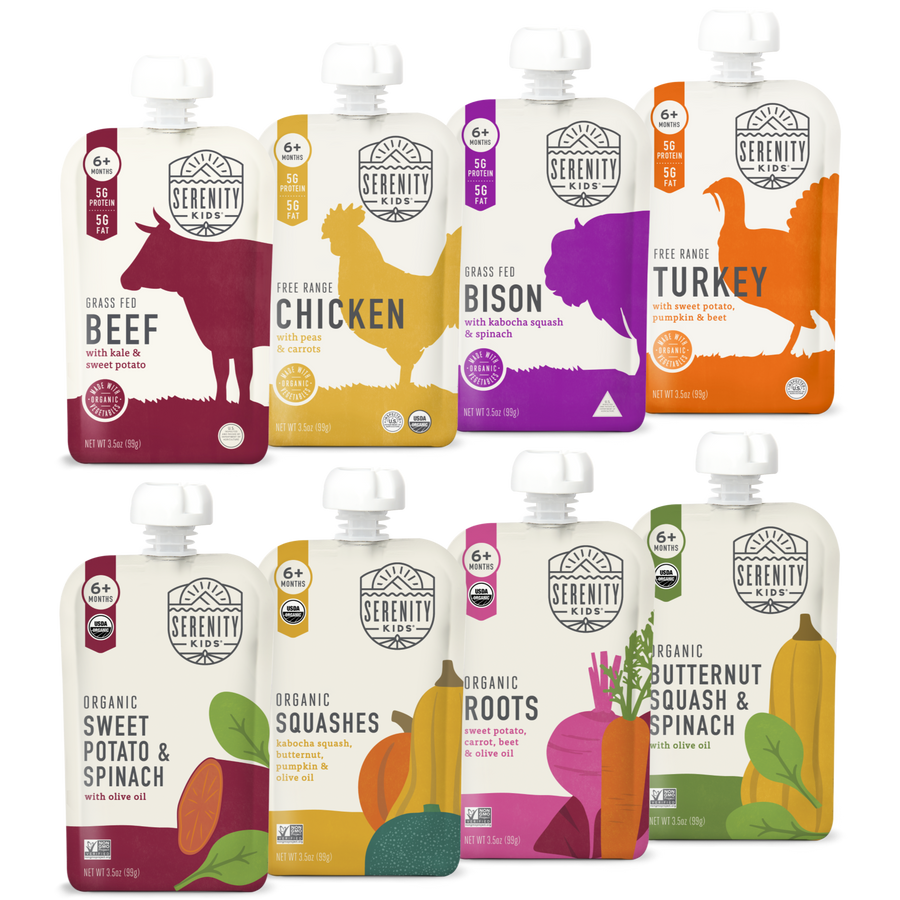


4.8
Rated 4.8 out of 5 stars
226 Reviews
Little World Traveler Pack
18 Ct.
$84.95
18 Ct.
Subscribe
$67.96


When can your baby eat puffs?
Every baby is different, so instead of simply considering their age, it’s important to look for signs that your baby is developmentally ready to safely chew and swallow their baby food. When trying to decide if it’s time to start introducing your little one to baby puffs, we suggest that you watch for these signs of readiness:
-
Able to sit independently: good postural support is crucial for swallowing food safely
-
Has lost the tongue-thrust reflex: this means that your baby doesn’t automatically push solids out of the mouth with the tongue
-
Has good head control: good head control is important for swallowing food safely
-
Is willing and able to chew: even if your baby doesn’t have teeth, they can use their jaws or teeth to mash food before swallowing to reduce the risk of choking
-
Is developing a pincer grasp: this skill shows that your baby needs to be able to pick up food and self-feed (more on this below)
-
Demonstrates an interest in solids: this indicates that your baby may be mentally ready to try out solids. (baby may watch you closely as you eat, lean into food, or try to grab food off of your plate)
-
Able to crawl with their stomach off the ground: crawling helps develop good body control and stability1, while also helping develop oral motor skills inside baby’s mouth
These signs help identify when a baby is ready to begin eating puffs. It’s important to remember that not all babies will reach these milestones at the same age, and that’s okay. Breastmilk and formula will continue to be your baby’s main source of nutrition through the first 12 months of their life, so there’s no rush when it comes to introducing your little one to solid food. For more information on introducing solids in a safe and stress-free way, consult your healthcare professional and read on about the dos and don’ts for introducing solids.
Tips for Introducing Puffs to Your Baby
Introducing puffs to your baby can be fun and safe when you follow a few simple tips to encourage self-feeding and healthy eating habits.
1. Start with a single puff at a time
Offer your baby one ready-to-eat puff at a time. This helps supervise your infant and ensures they learn how to munch safely.
2. Let your baby use their little fingers
Allow your baby to practice picking up puffs using the thumb and forefinger. This helps babies develop fine motor skills while learning to self-feed.
3. Ensure proper posture
Always serve puffs fed to seated babies. Sitting upright reduces the risk of choking and supports safe swallowing.
4. Try yogurt melts as a variation
Yogurt melts are another ready-to-eat snack that melts easily in the mouth. They provide a safe way to introduce your baby to new flavors while encouraging healthy eating habits.
5. Cut larger puffs if needed
For babies around 7-8 months, you can cut in half slightly larger puffs until your baby masters picking up food with their little fingers.
What is the pincer grasp?
Now that we’ve identified the signs that your baby may be ready to start eating puffs, you may be wondering about the pincer grasp and why it’s important.
The pincer grasp is an important developmental milestone for a baby’s fine motor skills. This skill requires control of the small muscles in the hand to pick up an item between the index finger and thumb. Babies use their pincer grasp to pick up food, like puffs, and feed themselves. As they get older, this skill will aid in the use of holding utensils, crayons, and more.
Although pincer grasp usually begins to develop when your baby is around 6 to 7 months of age2, it may take several months for your baby to really master it. In the meantime, puffs are a great way for your little one to practice their pincer grasp while experiencing a variety of new flavors.
For more information about starting your baby on real food, visit The Ultimate Guide to Giving Babies Real Food.
What makes Serenity Kids puffs different?
You may find yourself wondering - Are baby puffs healthy? But the answer isn’t a simple yes or no. Not all puffs are created equal.
Many baby puff snacks on the market contain added sugar or sweeteners and are made with low-nutrient grains like wheat or rice. These filler ingredients can be hard on developing digestive systems.
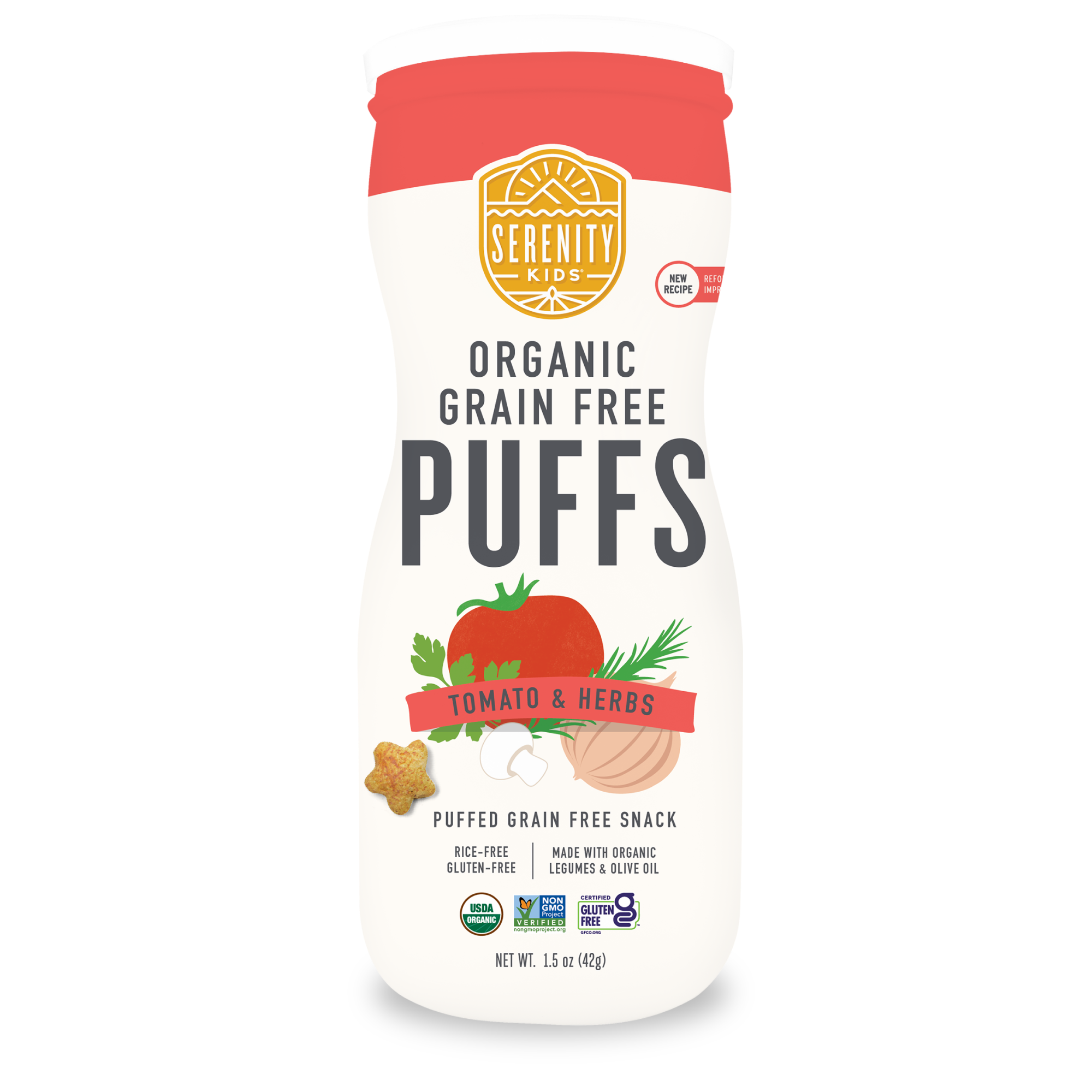
Serenity Kids’ baby puffs provide a more nutritious alternative to other baby puffs. Not only are our puffs free from grains and added sugars and sweeteners, but they are also free from common allergens like eggs, nuts, and dairy (aside from our Cheddar Cauliflower Spinach!), plus unwanted ingredients like artificial flavors, colors, GMOs, and additives. Instead, our puffs are made with ingredients like organic veggies, legumes, and olive oil. Packed with savory flavors in every crunch, our star-shaped puffs make it easy (and fun!) for your little one to develop a love for real veggie tastes early on during the critical flavor window.
Growing toddlers love snacks! Our puffs are suitable for toddlers who can sit independently, use a pincer grasp to self-feed, crawl with their stomach off the ground, or use their jaws to mash food between their gums. Plus, they easily dissolve in the mouth - so no teeth are necessary!
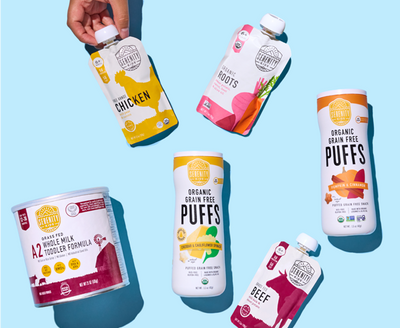
Whether you're introducing your little one to new tastes or just want a convenient all-in-one assortment, our Variety Pack delivers a delightful baby snacks sampling experience! Our Organic Grain Free Puffs are mom-crafted for little hands learning to eat on their own and for parents juggling real life.
Sources
1Nationwide Children’s Hospital. (2016, November). Why crawling is important for your baby.
2Children’s Hospital of Orange County. (n.d.). Rehab developmental milestones.
You Might Also Like


· 1 min read · Recipes
Berry Creamsicles Ingredients: 3 cups greek yogurt (dairy free also works) 2 Serenity Kids Beet...
Read More


· 7 min read · Education
When you're breastfeeding a baby, the thought of choosing a bottle can feel overwhelming. Whether...
Read More
Join our growing family
Sign up to get 15% off your first order
Invalid password
Enter