








Written by Dr. Keili Mistovich, MD, MPH, FAAP
Have you been overwhelmed by the idea of adding solid foods as a new parent? The whole process can feel very overwhelming. Not only do families need to choose one of many processes to begin introduction, they also need to choose what foods are best to offer.
While some parents will just talk to their pediatrician or family medicine doctor, create a plan and go with it, others will invest hours in the process, reading blog after blog online and sometimes even curating a specific feeding plan.
As a pediatrician, when I discuss feeding introduction in my clinic, the first decision is how to feed. Should we do baby-led weaning? A more traditional strategy with purées? Or maybe a combination of both? The reason why there is so much written about this, with equally passionate views on all sides (and a huge risk of going down the rabbit hole of opinionated voices on the internet), is because there is no “right” answer here. Generally, unless there is a specific medical condition or concern unique to your child, it comes down to which approach makes more sense for the family.
Once we come to a decision on how to feed, we move on to what to feed—equally tricky! Nevertheless, there are a few guidelines that apply regardless of feeding strategy. For example, we now know that early and frequent introduction of allergenic foods, such as peanuts, is critical to decreasing the risk of food allergy. Safety is also non-negotiable.
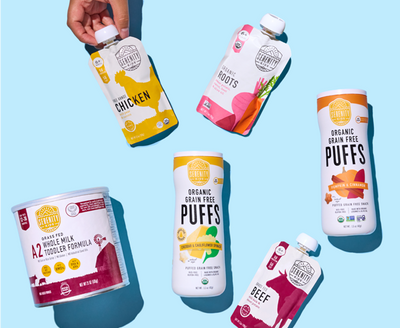
Best Sellers
They're not just parent favorites—they're little ones favorites too.


Little World Traveler Pack


Power Protein Variety Pack


In my practice, I teach parents my three golden rules of feeding.
- No honey until after age 12 months due to the risk of botulism.
- Cut or squash round foods (like grapes, blueberries, and cherry tomatoes) to reduce choking risk.
- Supervise all meals and snacks to ensure safe eating.
Beyond these rules, there is so much more flexibility – more than most parents appreciate!
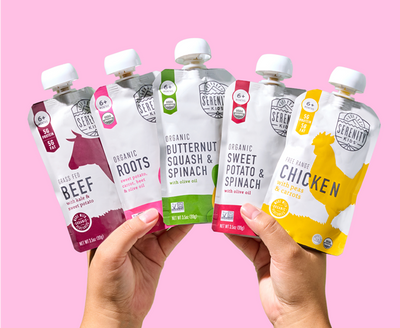
That being said, especially for families who are choosing the more traditional route of feeding with purées, there is often a predictable pattern. We start with rice cereal. We move to vegetables, then fruit purées. Protein sometimes comes later — and when it does, it is usually chicken or beef. It’s a comfortable approach for most families.
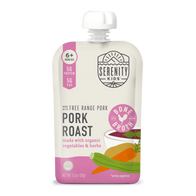
But there is one protein that regularly shows up on the American dinner plate (or breakfast!) yet rarely (if ever!) makes its way into the baby food aisle: pork!
While pork accounts for nearly half of the red meat consumed in the United States, it has been largely absent from early feeding conversations. In clinic, when I ask parents what proteins they are offering, I often hear eggs, chicken, yogurt, and sometimes beef. Rarely pork. Why? Because it simply has not been positioned as an option that parents even think about.
Why Protein Matters Early
During the first year of life, growth is rapid and metabolically demanding. Did you know that babies are expected to double in weight during the first 4 months and triple their weight in the first year? It sounds funny to say, but when newborns are first born, they are still under construction— some would say incompletely baked! Not only are babies entirely dependent on us for survival, but their bodies are building muscle, connective tissue, immune systems, and neural networks at an astonishing rate. Protein provides the building blocks needed for development and growth of all of these systems.
Animal proteins are considered “complete proteins,” meaning they contain all essential amino acids in the correct proportions to support human growth. Pork, in particular, provides a strong amino acid profile along with naturally occurring fats that help with nutrient absorption, as well as the feeling of having a full tummy.
Fat is also a critical building block for newborn growth and development. In fact, fat is the primary fuel source for brain development. During the first year, nearly 60% of the brain is composed of fat. Offering whole-food sources of protein that naturally contain fat supports both caloric needs and neurologic development in a way that low-fat or carbohydrate-heavy purées cannot. Baby brains love fat!
Pork as a Nutrient-Dense First Food
When prepared appropriately — soft, finely puréed, or incorporated into a textured blend — pork can be introduced safely in early complementary feeding. Nutritionally, pork provides:
-
High-quality complete protein
-
Iron and zinc for immune and cognitive development
-
B vitamins, particularly thiamin and B12, which support energy metabolism and neurologic health
-
Naturally occurring fats for brain fuel and growth
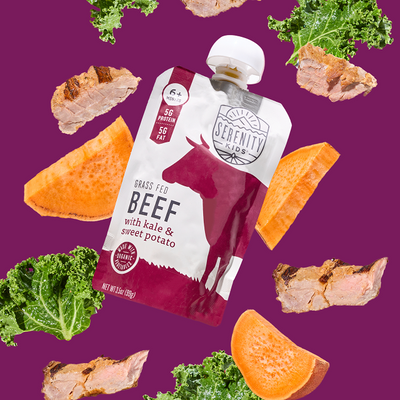
Iron deserves special mention. Around six months of age, an infant’s iron stores from pregnancy begin to decline. This is one reason pediatricians will recommend iron-rich foods at this age, as well as iron supplementation in many cases. Meat-based purées are a highly bioavailable source of iron, meaning the body can absorb that iron easily and use it efficiently.
Variety Builds Resilience
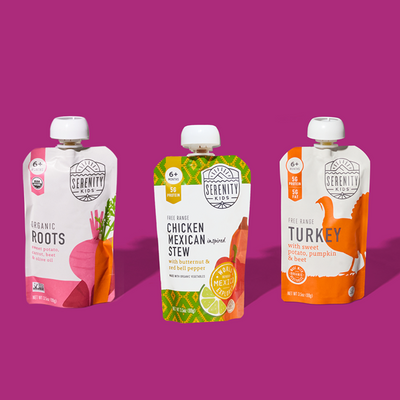
One of the principles I emphasize in my practice is dietary diversity. The developing immune system and microbiome respond to a wide range of nutrients and food exposures. Rotating proteins — beef, chicken, turkey, eggs, fish, and yes, pork — provides a broader nutrient spectrum than relying on one or two staples. As an added benefit, the greater the variety of foods that children are introduced to, the more likely they are to have a diverse palate and be willing to try new foods as they grow. We all know that toddlers can be so picky! Doing everything you can now to fend off this tendency will pay dividends.
Even more, one key to avoiding the trap of becoming a short-order cook for your child(ren) is to be intentional about making only one meal for the family, especially at dinnertime. Prioritize family meals, even with the littlest ones, and offer the same items for everyone. You may need to take it slightly easy on the spice level for little kids, but otherwise, don’t shy away from variability. Parents often tell me they worry about “too much flavor” or whether a savory meat will be overwhelming. Babies are far more adaptable than we give them credit for. When introduced gradually and paired with vegetables or healthy fats, pork can be both well tolerated and well loved.
A Practical Approach
If you are considering pork as part of your baby’s early food journey, here are a few principles I share with families:
-
Focus on quality. Choose responsibly sourced meat and foods without unnecessary additives.
-
Prioritize texture safety. For early feeders, this means smooth purées or shredded preparations for those embracing baby-led weaning.
-
Rotate proteins. Offer a range of animal and plant proteins over the course of the week.
-
Repeat exposure. It may take multiple tastes before a baby shows enthusiasm – that is totally normal!
Early feeding is about building a foundation and a journey of new and exciting experiences for your family. When we widen the range of nutrient-dense foods offered in the first year of life, we support growth, brain development, metabolic health, and long-term flavor acceptance.